Be (= am / is /are / was / were ) + -ing (cleaning / working etc):
am / is / are + past participle (passive present simple).
* I'm never invited to parties.
* Butter is made from milk.
* I was working when she arrived.
was / were + past participle (passive past simple).
* The office was cleaned yesterday.
* These houses were built 100 years ago.
* How was the window broken?
* Where were you born?
have / has + past participle (cleaned / lost / eaten / been etc):
have / has + past participle (present perfect).
* I've cleaned my room.
* Tom has lost his passport.
* Kate hasn't been to Canada.
* Where have Paul and Emma gone?
do / does / did / + infinitive (clean / like / eat / go etc):
do / does + infinitive (present simple negative and question).
* I like coffee, but I don't like tea.
* Chris doesn't go out very often.
* What do you do at weekend?
* Does Sam live alone?
did + infinitive (past simple negative and questions):
* I didn't watch TV yesterday.
* It didn't rain last week.
* What time did Paul and Emma go out?
Use is / are Or do / does: With questions?
1. Do you work in the evenings?
2. Where are the going?
3. Why are you looking at me?
4. Does Ben live near you?
5. Do you like cooking?
6. Is the sun shining?
7. What time do the shops close?
8. Is Maria working today?
9. What does this word mean?
10. Are you feeling all right?
Use am not / isn't / aren't Or don't / doesn't.
All these sentences are negative.
1. Tom doesn't work at weekends.
2. I'm very tired. I don't want to go out this evening.
3. I'm very tired. I am not going out this evening.
4. Gary isn't working this week. He's on holiday.
5. My parents are usually at home. They don't go out very often.
6. Nicola has traveled a lot, but she doesn't speak any foreign languages.
7. You can turn off the television. I'm not watching it.
8. Lisa has invited us to her party next week, but we aren't going.
Use was / were / did / have / has:
1. Where were your shoes made?
2. Did you go out last night?
3. What were you doing at 10.30?
4. Where was your mother born?
5. Has Laura gone home?
6. What time did she go?
7. When were these houses built?
8. Has Steve arrived yet?
9. Why did you go home early?
10. How long have they been married?
Use is / are / was / were / have / has :
1. Joe has lost his passport.
2. This bridge was built ten years ago.
3. Have you finished your work yet.
4. This town is always clean. The streets are cleaned every day.
5. Where were you born?
6. I have just made some coffee. Would you like some?
7. Class is made from sand.
8. This is a very old photograph. It was taken a long time ago.
9. David has bought a new car.
Make sentences with verbs:
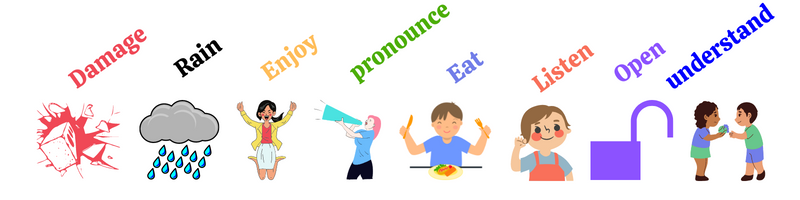
1. I'm going to take an umbrella with me. It's raining.
2. Why are you so tired? Did you go to bed late last night?
3. Where are the chocolates? Have you eaten them all?
4. How is your new job? Are you enjoying it?
5. My car was badly use in the accident, but I was OK.
6. Kate has got a car, but she doesn't it very often.
7. Lisa isn't at home. She has gone away for a few days.
8. I don't understand the problem. Can you explain it again?
9. Mark is in his room. He's listening to music.
10. I don't know how to say this word. How is it pronounced?
11. How do you open this window? Can you show me?