
For - Since - Ago
For and since We use for and since to say how long: * Helen is Ireland. She has been there | for three days | since Monday We use for + a period of time (three days / two years etc):

have you? - are you? - don’t you? etc…
You can say have you? / is it? / can't he? etc. to show that you are interested or surprised: O You're late. Oh, am I? I'm sorry. O I was ill last week. Were you? I didn't know that. O It's raining again. Is it? It was sunny ten minutes ago.

too - either so am i - neither do I etc…
We use too and either at the end of a sentence: We use too after a positive verb: O A: I'm happy. B: I'm happy too. O A: I enjoyed the film. B: I enjoyed it too. O Jane is a doctor. Her husband is a doctor too.

isn’t - haven’t don’t etc. (Negative):
We use not (n't) in negative sentences: positive: * am am not ('m not). * is is not (isn't or 's not). * are are not (aren't or 're not). * was was not (wasn't). * were were not (weren't). * have have not (haven't). * has has not (hasn't).
is it….? have you…? do they…? etc: (negative 1):
In questions, the first verb (is/are/have etc) is before the subject: Positive subject + verb question verb + subject: Remember: the subject is after the first verb. O Where has David gone? (not Where has gone David?)

who saw you? who did you see? (questions 2):
Silvia saw Paul. Who saw Paul? Silvia. (Silvia saw him.). Who did Silvia see? Paul. (She saw Paul.): In these questions, who/what is the subject: O Who lives in this house? (= somebody lives in it - who?)

who is she talking to? what is it like (questions 3):
In questions beginning Who ... ? / What ... ? / Where ... ? / Which ... ?, prepositions (to/from/with. etc.) usually go at the end: O Where are you from? I'm from Thailand. O Jack was afraid. What was he afraid of?
what….? which….? how….? (questions 4)
What + noun (What color... ? / What kind... ? etc.): O What color is your car? O What color are your eyes? O What size is this shirt? O What make is your TV? O What time is it? O What day is it today?
how long does it take...?
How long does it take from ... to ... ? How long does it take by plane from New York to Washington? It takes an hour. O How long does it take by train from London to Manchester? O It takes two hours by train from London to Manchester.

do you know where...? I don't know what... etc
Do you know We say: Where is Paula? where Paula is? but Do you know where Paula is ? (not Do you know where is Paula?) In the same way we say: / I know / I don't know where Paula is. Can you tell me

She said that... He told me that...
Last week you went to a party. A lot of your friends were there. Where there. Here are some things they said to you: * Today you meet Paul. You tell him about the party. You tell Paul what your friends said:

He speaks English very well. (word order)
The verb (bought) and the object (some new shoes) are usually together. We say. - Sue bought some new shoes yesterday. (not Sue bought yesterday some new shoes).
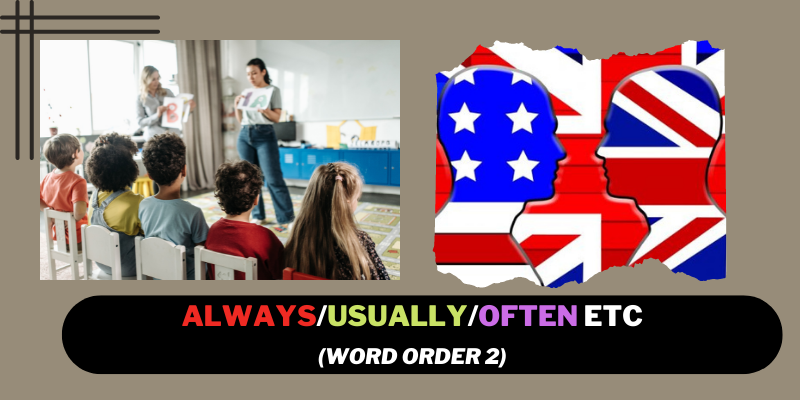
always/usually/often etc (word order 2)
- My brother never speaks to me. - She's always late. - Do you often go to restaurants? - I sometimes eat too much. (or Sometimes I eat too much.). - A: Don't forget to phone Laura.