We use every + singular noun (every house /every country etc):
- Sarah has been to every country in Europe.
- Every summer we have a holiday by the sea.
- She looks different every time I see here.
Use a singular verb after every:
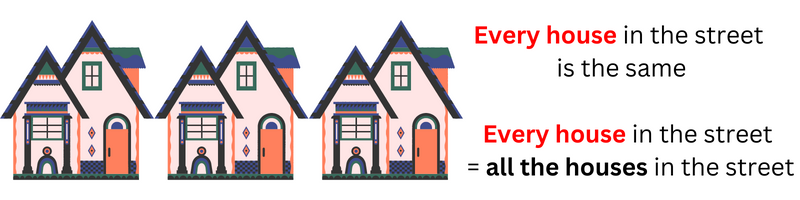
- Every house in the street is the same. (not are the same).
- Every country has a national flag. (not have).
Compare every and all:
- Every student in the class passed the exam. All the students in the class passed the exam.
- Every country has a national flag. All countries have a national flag.
Every day and all day:
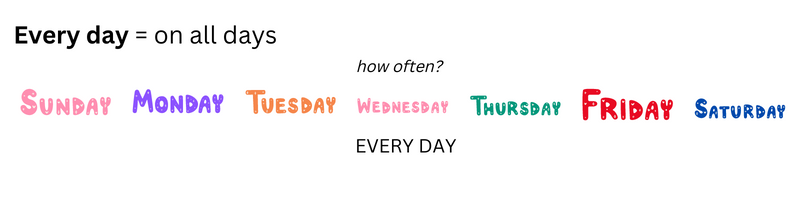
- It rained every day last week.
- Ben watches TV for about two hours every evening (= on all evening)
also every morning /night/summer etc...
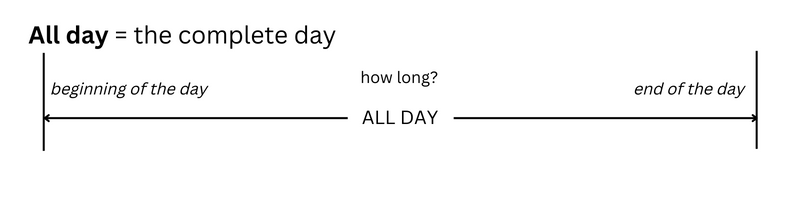
- It rained all day yesterday.
- on Monday, I watched TV all evening (= the complete evening)
also every morning /night/summer etc...
everybody (or everyone) / everything / everywhere:
everybody or everyone for (people):
- Everybody or everyone needs friends (= all people need friends).
everything for (things):
- Do you have everything you need? (= all the things you need).
everywhere for (places):
- I lost my watch. I've looked everywhere for it (= I've looked in all places).
Use a singular verb after everybody/everyone/everything:
- Everybody has problems. (not Everybody have).
Make sentences Use every + word:
1. Every student in the class passed the exam.
2. My job is very boring Every day is the same.
3. Kate is a very good tennis player. When we play, she is wins every time.
4. Every room in the hotel has free internet access and a minibar.
5. Did you understand what she said? Most of it, but not every word.
Make sentences with every day or all day:
1. Yesterday it rained all day.
2. I buy a newspaper every day, but sometimes I don't read it.
3. I'm not going out tomorrow. I'll be at home all day.
4. I usually drink about four cups of coffee every day.
5. Paula was ill yesterday, so she stayed in bed all day.
6. I'm tired now because I've been working hard all day.
7. Last year we went to the seaside for a week, and it rained every day.
Make sentences with every or all:
1. Bill watches TV for about two hours every evening.
2. Julia gets up at 6.30 every morning.
3. The weather was nice yesterday, so we sat outside all afternoon.
4. I’m going away on Monday. I'll be away all week.
5. A: How often do you go skiing?
B: Every year. Usually in March.
6. A: Were you at home at 10 o'clock yesterday?
B: Yes, I was at home all morning. I went out after lunch.
7. My sister loves new cars. She buys one every year.
8. I saw Sam at the party, but he didn't speak to me all evening.
9. We go away on holiday for two or three weeks every summer.
Make sentences with everybody/everyone=everything/everywhere:
1. Everybody needs friends.
2. Chris knows everything about computers.
3. I like the people here. Everybody/Everyone is very friendly.
4. This is a nice hotel. It's comfortable and everything is very clean.
5. Kevin never uses his car. He goes everywhere by motorcycle.
6. Let's get something to eat. Everybody/Everyone is hungry.
7. Sue's house is full of books. There are books everywhere.
8. You are right. Everything you say is true.
Another example:
1. Everybody has problems.
2. Are you ready yet? Everybody is waiting for you.
3. The house is empty. Everyone has gone out.
4. Gary is popular Everybody likes him.
5. This town completely different now. Everything has changed.
6. I got home very late last night. I came. in quietly because everyone was asleep.
7. Everybody makes mistakes!
8. A: Is everything clear? Does everybody know what to do?
B: Yes, we all understand.